


LocalOnly
4.6274.00 Reviews
App Specs
- Version
- 1.0.1
- Updated On
- License
- Free
- Downloads
- 50,000+
- Developer
- Cryze love
- Categories
- Entertainment
- Platform
- Android
Screenshots

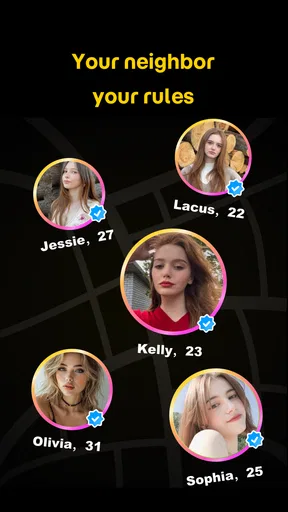
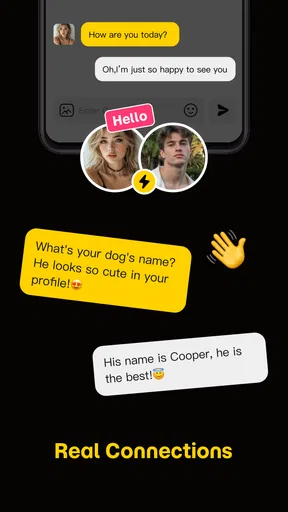


 Analysis by AppCompare
LocalOnly is an entertainment app from Cryze love that takes a deliberately narrow approach to online discovery: it focuses on people in your local area rather than presenting an endless, worldwide stream. I found that idea more useful than the short store wording suggests, because it changes the question from “What is popular everywhere?” to “What is relevant around me right now?” That makes it interesting for users who want nearby conversations, local personalities, or a more immediate sense of what is happening in their surroundings.
It is also an app that asks you to be comfortable with a more mature environment. LocalOnly is rated for Mature 17+, and that is important before you install it, particularly if you are choosing entertainment apps for a shared family device. The experience is not aimed at children or at people who want a carefully filtered, universally safe feed. My overall impression is that it works best as a focused local discovery tool, not as a complete replacement for every social, video, or community app on a phone.
How I would decide whether LocalOnly is right for me
Before comparing it with familiar alternatives, I would start with the type of local connection I actually want. If I want polished entertainment from professional creators, a mainstream video service is usually the easier choice. If I want structured neighborhood announcements, a dedicated community platform may be more practical. If I want private conversations with people I already know, messaging apps remain the obvious option. LocalOnly becomes more compelling when the goal is to explore nearby activity with fewer layers between the user and the local audience.
That distinction matters because “local” can mean several different things. It can mean discovering people who live nearby, finding content that reflects the same surroundings, or simply seeing a more geographically relevant feed. I would not install this expecting the broadest selection of entertainment. I would install it because the local angle is the main reason to open it. The app’s value depends less on how much content it contains and more on whether the nearby focus makes that content feel more useful to me.
In practical terms, I would ask myself three questions. Do I enjoy discovering unfamiliar people or local activity? Am I comfortable using a service with a mature audience? And will I actually check a location-focused feed often enough for it to become part of my routine? If the answer to all three is yes, the concept has a clear purpose. If I mainly want celebrity content, global trends, or a private way to keep up with friends, another category will probably serve me better.
The app is free to install, which lowers the barrier to trying it. At the same time, the presence of in-app purchases ranging from $9.99 to $179.99 per item means I would treat the free entry point as an opportunity to evaluate the experience, not as a promise that every possible part of the service will remain cost-free. I would explore the core experience first and decide carefully before spending anything.
The local focus changes how discovery feels
The strongest idea here is not simply showing another stream of entertainment. It is the possibility of making distance part of the browsing experience. A post or creator can feel more relevant when the surrounding place is familiar, because local context gives me something to act on: a nearby conversation to follow, a person whose perspective reflects the same area, or a reason to return later and see what has changed.
Worth Reading Before You Choose

EA SPORTS FC Mobile 26 Is a Bigger Football Game, but It Takes Time

Flipboard Shows What News Apps Must Do Beyond the Feed

Switching to Android Auto Means Rethinking Your Driving Routine

Google Calendar Makes a Crowded Week Easier to Manage

Ludo King Makes the Most of the Minutes Between Plans

Baby Panda World Brings Quick Play to Modern Phones, but Its Game Library Feels Busy
That can make browsing feel less passive. On a global platform, I can spend a long time watching material that is enjoyable but disconnected from my daily life. With a local-first service, I am more likely to judge something by whether it helps me understand or participate in my immediate surroundings. I would not assume every item will be useful, but the geographic emphasis gives the browsing session a clearer purpose.
A realistic example would be someone who has recently moved to a new city. Instead of relying only on search results or established publications, that person could use LocalOnly as a way to see what nearby users are sharing and which local voices seem worth following. It would not replace official information, and I would still verify anything important elsewhere, but it could provide a more human starting point for learning the character of an area.
Another use case is a quiet evening when I want something more personal than a large entertainment feed. I might open the app to see what nearby users are discussing, then return later because the local angle gives me a reason to check in. That repeat value is the key test. If the surrounding community is active enough for my interests, LocalOnly could feel distinctive. If not, the narrower scope may make the app feel empty compared with a global service.
Three ways to get more from a narrower service
My first practical tip is to use LocalOnly with a specific purpose instead of treating it as an endless scrolling replacement. I would open it when I want local discovery, not automatically whenever I reach for entertainment. That small change helps me judge whether the location-based approach is genuinely useful rather than comparing it unfairly with apps built around maximum volume.
Second, I would pay attention to the difference between local relevance and personal relevance. Something can be nearby without matching my interests, while something farther away may be much more valuable. If LocalOnly helps me find a local voice I would otherwise miss, that is a meaningful success. If I repeatedly see nearby material that does not fit what I enjoy, I would switch categories rather than assuming more time will solve the problem.
Third, I would avoid treating proximity as a substitute for trust. Local content can feel familiar because it relates to the same streets, neighborhoods, or surroundings, but familiarity does not automatically make a claim accurate or a person reliable. For everyday entertainment, that may be a manageable trade-off. For safety, money, health, or local emergencies, I would use official sources and established services instead.
These habits also help with the mature rating. I would use the app in a setting where I can make my own decisions about what I encounter, and I would not recommend it casually to younger users simply because the download is free. The age classification should be part of the decision, not a detail noticed after installation.
What the current release suggests about expectations
LocalOnly is currently at version 1.0.1 and requires Android 7.0 or later. That makes it accessible to many older Android phones, which is helpful if I want to test the idea without using a recent device. Still, an early release naturally makes me more patient about rough edges. I would expect the experience to be judged primarily on whether the central local concept works for me, rather than assuming it already has the depth of a long-established entertainment network.
The app has a 4.7 average from around 2.6 thousand ratings, with more than 270 written reviews and over 50 thousand installs. Those figures show that the concept has attracted a meaningful early audience, but they do not tell me whether that audience matches my own location or interests. For a local service, personal fit matters more than broad popularity. A large overall audience does not guarantee a lively experience in my area, so I would evaluate the app based on what I can actually discover after installing it.
That is one of the unusual trade-offs of this category. A global platform can usually compensate for weak local activity with an enormous supply of other content. A local-first app has a more specific identity, but its usefulness may vary sharply from one place to another. I would give it a fair trial, then make a decision based on the quality and relevance of the nearby experience rather than on the headline rating alone.
Where LocalOnly wins, and where another category may fit better
I find the useful question here is not whether a local-first entertainment app can replace the services I already use, but whether it gives me a reason to open one more feed. I’d judge that by looking for a repeatable routine—checking nearby perspectives when I’m curious about my surroundings, rather than scrolling automatically—and by deciding in advance what would make that habit worthwhile. That makes the comparison with broader entertainment and community tools more practical.
Its advantage over broad entertainment feeds
LocalOnly has a clear advantage when geographic relevance is more important than sheer variety. Large entertainment platforms are excellent at finding something to watch, but their recommendations often push me toward content with the widest appeal. That can be convenient, yet it can also make my surroundings feel invisible. A local-first app offers a different kind of discovery, one that may feel more immediate even when the amount of content is smaller.
I also like the possibility of reducing the distance between discovery and action. If I find a nearby person or local topic that interests me, the next step can be more tangible than simply watching another distant clip. That does not mean every local interaction will be worthwhile, but the app’s premise gives browsing a stronger connection to real life than a purely global recommendation engine.
For someone who feels overwhelmed by massive feeds, this narrower identity may also be a benefit. The point is not necessarily to consume more. It is to make the selection feel more connected to where I am. I would recommend that approach to users who are tired of generic recommendations and want entertainment with a local flavor.
When a community platform is the better tool
I would choose a structured neighborhood or community service when I need dependable organization. Those platforms are generally better suited to announcements, practical questions, local notices, and clearly separated discussions. LocalOnly makes more sense when I am browsing for entertainment and local voices rather than managing a formal community task.
This distinction is especially important for users who want a reliable local information source. I would not make LocalOnly my only resource for transport changes, public safety, official events, or urgent notices. A service designed around verified local communication is a better fit for those needs. LocalOnly can complement that kind of tool by showing a more informal side of the area, but it should not replace official channels.
When social and messaging apps remain preferable
If my priority is keeping up with people I already know, a messaging app is less complicated. I do not need to discover a local audience when my real goal is a private conversation, a group plan, or a quick update from friends. Likewise, if I want a mature set of controls for an established social network, I may prefer an app whose main purpose is identity-based connection rather than local browsing.
LocalOnly is better suited to the space between public discovery and personal contact. That can be appealing, but it also means I should think about how much openness I want. Users who prefer tightly controlled circles may find the local focus less comfortable than a private group. Users who enjoy meeting unfamiliar perspectives may see that same openness as the main attraction.
The cost of switching and the cost of staying
Switching to LocalOnly is relatively easy because the app is free to install and supports Android devices running version 7.0 or later. The real cost is not technical; it is the time needed to learn whether the local feed is active and relevant for me. I would not judge it after a single brief opening, because a location-based service can feel different depending on when I check and what I am looking for.
Staying also has a cost if I begin using several entertainment apps at once. Every additional feed competes for attention, and LocalOnly needs to earn its place by offering something I cannot get from my usual choices. I would keep it if the local perspective changes what I discover or helps me feel more connected to my surroundings. I would remove it if I keep opening it out of habit and finding no distinct value.
Purchases deserve the same careful approach. Because individual in-app items can reach a high price, I would never spend simply to test whether the app might become useful. I would first establish a repeatable reason to return, understand what I am paying for, and check the purchase screen closely before confirming. For many users, the free experience may be enough to decide whether the concept fits; for others, the paid options could become relevant only after the app has proved its everyday value.
There is also a social switching cost. If I already have friends, creators, or groups established elsewhere, LocalOnly may not immediately feel as rich. A local service needs time for discovery to become personal. I would recommend using it alongside an existing favorite at first, rather than deleting everything else and expecting an instant replacement. That makes the comparison fairer and avoids losing access to the tools that already serve a clear purpose.
Who should try it, and who should skip it
I would recommend LocalOnly to adults who enjoy exploring local perspectives and want an entertainment app with a more immediate geographic identity. It is also worth trying for someone new to an area, someone who finds global feeds too impersonal, or someone who wants to see whether nearby discovery can make casual browsing more meaningful.
I would suggest skipping it if the main goal is professional video, international trends, private messaging, or dependable official information. I would also skip it for a child because of the Mature 17+ rating. Users who dislike open-ended discovery or who expect every local result to be polished and highly relevant may become frustrated with the trade-off between a narrower focus and potentially less predictable variety.
My final recommendation is cautious but positive: try LocalOnly as a specialist entertainment app, not as a universal replacement. Its strongest reason to exist is the local lens, and that is exactly what I would test first. If the nearby content feels active, relevant, and worth revisiting, the app can earn a regular place on my phone. If I only want an enormous catalog or a private circle, another category will be the better choice.
For me, the deciding principle is simple: LocalOnly is most valuable when “nearby” is part of what I want to discover. Cryze love has built the app around that idea, and the early audience suggests it has found interest among Android users. I would install it, explore without rushing into purchases, compare its local usefulness with my existing apps, and keep it only if it adds a kind of relevance those alternatives do not provide.
Pros
- Works without an internet connection once local content is available.
- Keeps data on the device
- improving privacy and reducing cloud exposure.
- Useful for travel
- remote areas
- or locations with unreliable mobile coverage.
- Simple offline-focused design can be easier to use than cloud-based alternatives.
- Can help reduce mobile data usage and avoid recurring online service costs.
Cons
- Offline content may require significant storage space on the device.
- Features can be limited compared with apps that rely on online services.
- Sharing or syncing information across multiple devices may be inconvenient.
- Content may become outdated without occasional manual updates.
- Compatibility and performance can vary between Android and iOS devices.
FAQs for LocalOnly
What is LocalOnly and what can I use it for?
LocalOnly is designed for sharing and transferring content between nearby devices without relying on a traditional cloud service. Depending on the supported features and device permissions, it may let you exchange files, photos, videos, notes, or other information over a local connection. It is especially useful when privacy, speed, or offline access is more important than remote synchronization.
Does LocalOnly require an internet connection to work?
The main purpose of LocalOnly is local communication, so many of its core functions can work without mobile data or an active internet connection. However, the exact connection method may depend on your device, such as Wi-Fi, Wi-Fi Direct, Bluetooth, or a local network. Internet access may still be required for downloading the app, checking updates, or using optional online features.
Is LocalOnly safe and private to use?
LocalOnly can offer a more private alternative to services that upload your content to remote servers, because transfers are intended to remain within your local environment. Nevertheless, privacy also depends on your network, device security, and sharing choices. Review the permissions requested, avoid accepting transfers from unknown devices, and use the app only on networks or connections you trust.
Which devices and operating systems are compatible with LocalOnly?
Compatibility depends on the version of LocalOnly available for Android or iOS and on the communication features supported by your device. Before installing, check the app-store listing for the minimum operating-system version, supported hardware, and any platform limitations. Some functions may work differently across Android and iPhone, particularly when background access, local discovery, or file permissions are restricted.
What should I do if LocalOnly cannot find another device or a transfer fails?
First, make sure both devices have LocalOnly installed, are close enough, and have the required Wi-Fi, Bluetooth, or local-network settings enabled. Check that the app has permission to access nearby devices, local networks, photos, files, or other necessary resources. Restarting discovery, reopening the app, disabling restrictive battery settings, and updating both installations can also resolve connection problems.


